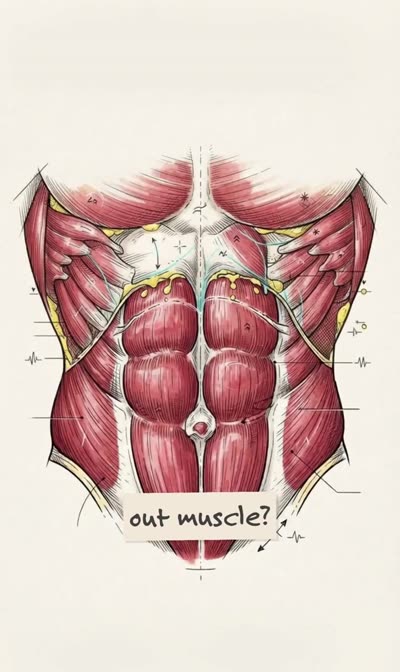
The second phase of energy-assisted lipolysis splits into two techniques that are often discussed as if they were the same thing. They are not. Power-assisted liposuction moves tissue with rapid mechanical vibration. Ultrasound-assisted liposuction, presented in this deck under the VASER name, uses high-frequency acoustic energy to create cavitation inside the tissue. One is a motorised version of a mechanical action; the other is a physical process that does not exist in conventional extraction at all. The deck The Biophysics of Energy-Assisted Lipolysis and Thermal Tightening places them side by side precisely to make that contrast visible. If you have been weighing up facial liposuction for a home around Miami, FL, this guide covers how it actually works, what it tends to cost, and where the results usually fall short.
The short version
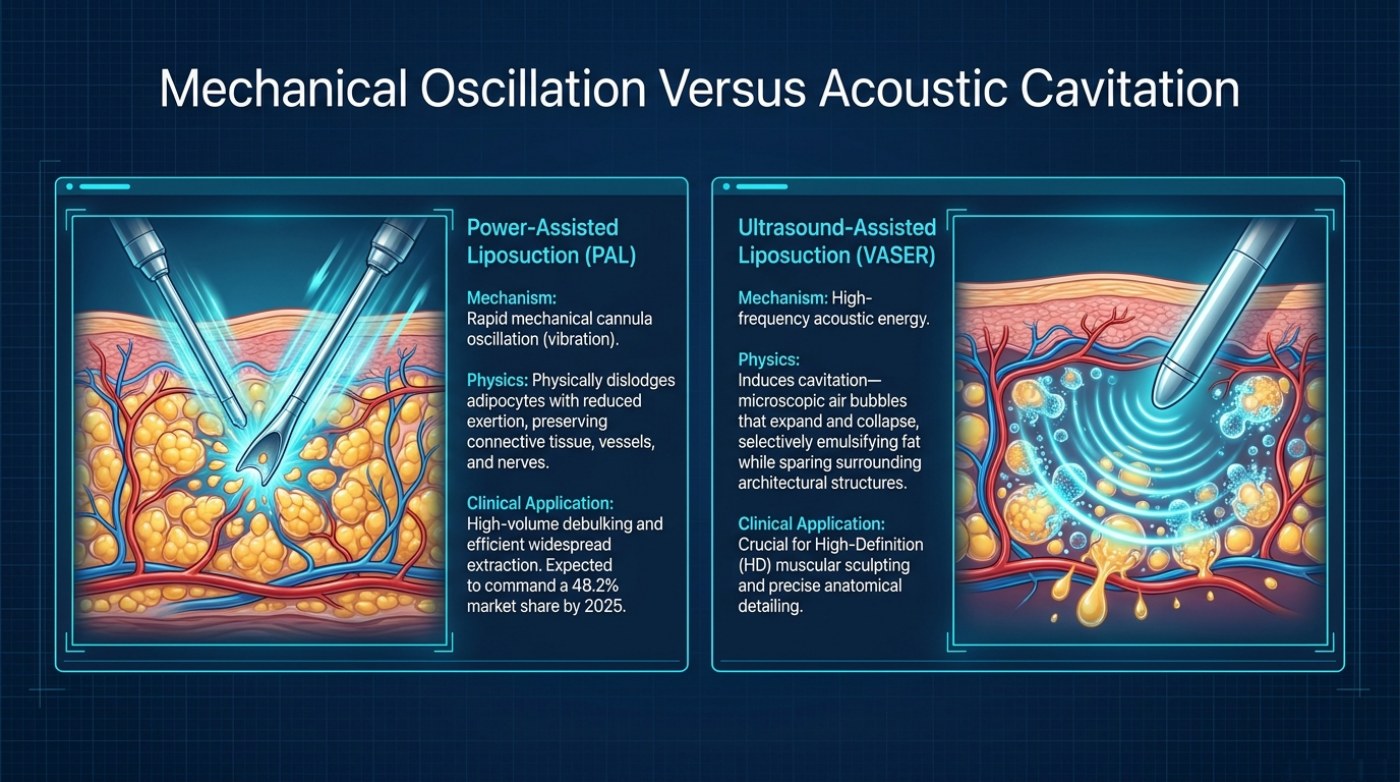
- Power-assisted liposuction frees fat with rapid mechanical cannula oscillation, while ultrasound-assisted liposuction uses high-frequency acoustic energy.
- The acoustic VASER branch induces cavitation, microscopic air bubbles that expand and collapse to selectively emulsify fat.
- PAL is named for high-volume debulking and widespread extraction, and the acoustic branch for high-definition muscular sculpting.
- The deck expects power-assisted liposuction to command a 48.2% market share by 2025, presented as a projection.
- The comparison is mechanistic: the slide states no complication, recovery or durability differences between the two techniques.
Mechanism: Reciprocating Metal Versus Acoustic Energy
The slide's mechanism line for power-assisted liposuction is short and specific: rapid mechanical cannula oscillation, with vibration named in parentheses. The cannula reciprocates in the operator's hand at a rate and stroke the instrument controls. Nothing about the tissue's chemistry changes; the fat cells are being worked loose by repeated mechanical contact, and the instrument is supplying the repetition.
For the acoustic branch the mechanism line reads high-frequency acoustic energy. There is no vibrating metal tip doing the dislodging. Energy is transmitted into the subcutaneous layer as sound, and the tissue responds to it. The distinction matters because the two devices fail differently, feel differently in the hand, and produce different endpoints, even when both are described as assisted liposuction.
Physics: Dislodging Adipocytes Versus Selective Emulsification
The deck's physics line for PAL states that the technique physically dislodges adipocytes with reduced exertion, while preserving connective tissue, vessels and nerves. Two things are being claimed at once there. The first is an ergonomic and endurance claim — less exertion per unit of work — and the second is a preservation claim about what the mechanical action does not disturb. Connective tissue resists the reciprocating pull better than fat does, and the named vessels and nerves are structural elements the technique is described as sparing.
The physics line for the acoustic branch describes a different sequence of events. Cavitation is defined on the slide as microscopic air bubbles that expand and collapse. The collapse is the working event: it selectively emulsifies fat while sparing surrounding architectural structures. Selectivity is the whole argument for this branch. Emulsified fat is in a state that can be drawn out, while the architecture around it — the same class of structure the PAL line names — is described as surviving the process.
Read together, the two physics descriptions cover opposite ends of the same goal. PAL lowers the mechanical effort needed to free fat that is still solid. The acoustic branch changes the fat's physical state first, so that what remains is easier to remove and easier to remove with discrimination. Neither is described as superior in the deck; they are characterised as suited to different jobs.
Clinical Application: Bulk Debulking Versus Anatomical Detail
The clinical application lines are where the two branches separate most sharply. PAL is named for high-volume debulking and efficient widespread extraction. That is volume work: large areas, substantial removal, throughput. The technique's value in that setting is reach and speed, which is exactly what reduced exertion per stroke buys over a manual case.
The acoustic branch is named for high-definition muscular sculpting and precise anatomical detailing. That is not a volume proposition; it is a precision proposition, and it is consistent with the selective emulsification described in the physics line. High-definition work depends on being able to remove fat close to structures that must stay intact, and a mechanism that emulsifies fat while sparing surrounding architecture is the natural fit for that requirement.
The slide also carries a market figure. It states that PAL is expected to command a 48.2% market share by 2025. The source material presents this as a projection without naming a study behind it, so it should be read as the deck's stated expectation rather than as a citation to a specific published analysis. The number is useful as an indicator of how dominant the power-assisted approach is expected to remain even as acoustic and thermal platforms expand.
Why the Two Branches Coexist
A reasonable question follows from the comparison: if acoustic energy can emulsify fat selectively, why does mechanical oscillation remain the expected volume leader? The deck's own application lines answer it. Selectivity and coverage are different costs. Emulsification that deliberately spares surrounding architecture is a targeted operation, and it is named for detailing work rather than for wide-area removal. Mechanical oscillation is named for widespread extraction, where the objective is leaving less tissue behind across a broad region.
There is also a planning dimension. A case built around high-definition sculpting has to decide where fat should remain as well as where it should go, and that is a fundamentally different exercise from debulking a region. The deck's phase framework puts PAL and the acoustic branch together in phase two because both operate on fat before or during extraction, but the clinical application lines make clear that the two are aimed at different endpoints within that shared phase.
How to Read the Comparison Honestly
The slide is a mechanism comparison, not an outcome comparison. It does not state complication rates, recovery differences, or result durabilities for either technique, and nothing in it should be read as doing so. What it provides is a clean account of two physical processes and the endpoints each is associated with, together with one market projection. For anyone trying to understand why a given case might be described as a debulking procedure rather than a detailing procedure, that is the useful part.
| Slide field | Power-Assisted Liposuction (PAL) | Ultrasound-Assisted Liposuction (VASER) |
|---|---|---|
| Mechanism | Rapid mechanical cannula oscillation (vibration) | High-frequency acoustic energy |
| Physics | Physically dislodges adipocytes with reduced exertion, preserving connective tissue, vessels and nerves | Induces cavitation — microscopic air bubbles that expand and collapse, selectively emulsifying fat while sparing surrounding architectural structures |
| Clinical application | High-volume debulking and efficient widespread extraction | Critical for high-definition (HD) muscular sculpting and precise anatomical detailing |
| Stated market position | Expected to command a 48.2% market share by 2025 | Not stated on this slide |
| Step | What the slide states happens |
|---|---|
| Energy delivery | High-frequency acoustic energy is introduced into the treatment area |
| Bubble formation | Microscopic air bubbles form and expand within the tissue |
| Bubble collapse | The bubbles collapse, producing the emulsifying effect |
| Selectivity | Fat is emulsified while surrounding architectural structures are spared |
| Objective | Technique named in the deck | Mechanism that serves it |
|---|---|---|
| Volume removal across a broad area | PAL | Mechanical oscillation reducing exertion per stroke |
| Precise anatomical detailing | Acoustic (VASER) | Selective cavitation-mediated emulsification |
| Muscular definition and sculpting | Acoustic (VASER) | Emulsification that spares surrounding architecture |
| Structural preservation during either approach | Both | Connective tissue, vessels and nerves described as preserved or spared |
Frequently Asked Questions
Is cavitation the same thing as vibration?
No. The deck keeps them separate. Vibration is the rapid mechanical oscillation of the cannula itself, described under PAL, where the instrument's movement does the work. Cavitation is a consequence of acoustic energy delivered into tissue, described under the acoustic branch, where microscopic bubbles expand and collapse. One involves a moving instrument tip and the other does not.
Which technique is described as better for definition work?
The slide assigns high-definition muscular sculpting and precise anatomical detailing to the acoustic branch, and high-volume debulking and efficient widespread extraction to PAL. It does not rank the two overall. The clinical application lines describe different objectives rather than a hierarchy, and the deck states no outcome or safety comparison between them.
What does the 48.2% figure refer to?
It is the market share the source material expects PAL to command by 2025, presented as a projection on the slide. The deck does not name a study behind the figure, so it is best treated as the material's stated expectation for the technique's commercial position rather than as a measured result about any individual procedure.
Related Reading
- How Much Fat Can Be Removed in One Liposuction Session
- High-Definition Liposuction and Abdominal Etching
- Liposuction vs Non-Surgical Fat Reduction
This is published information, not medical advice — a board-certified surgeon must assess whether a procedure suits you.